Gurez Valley
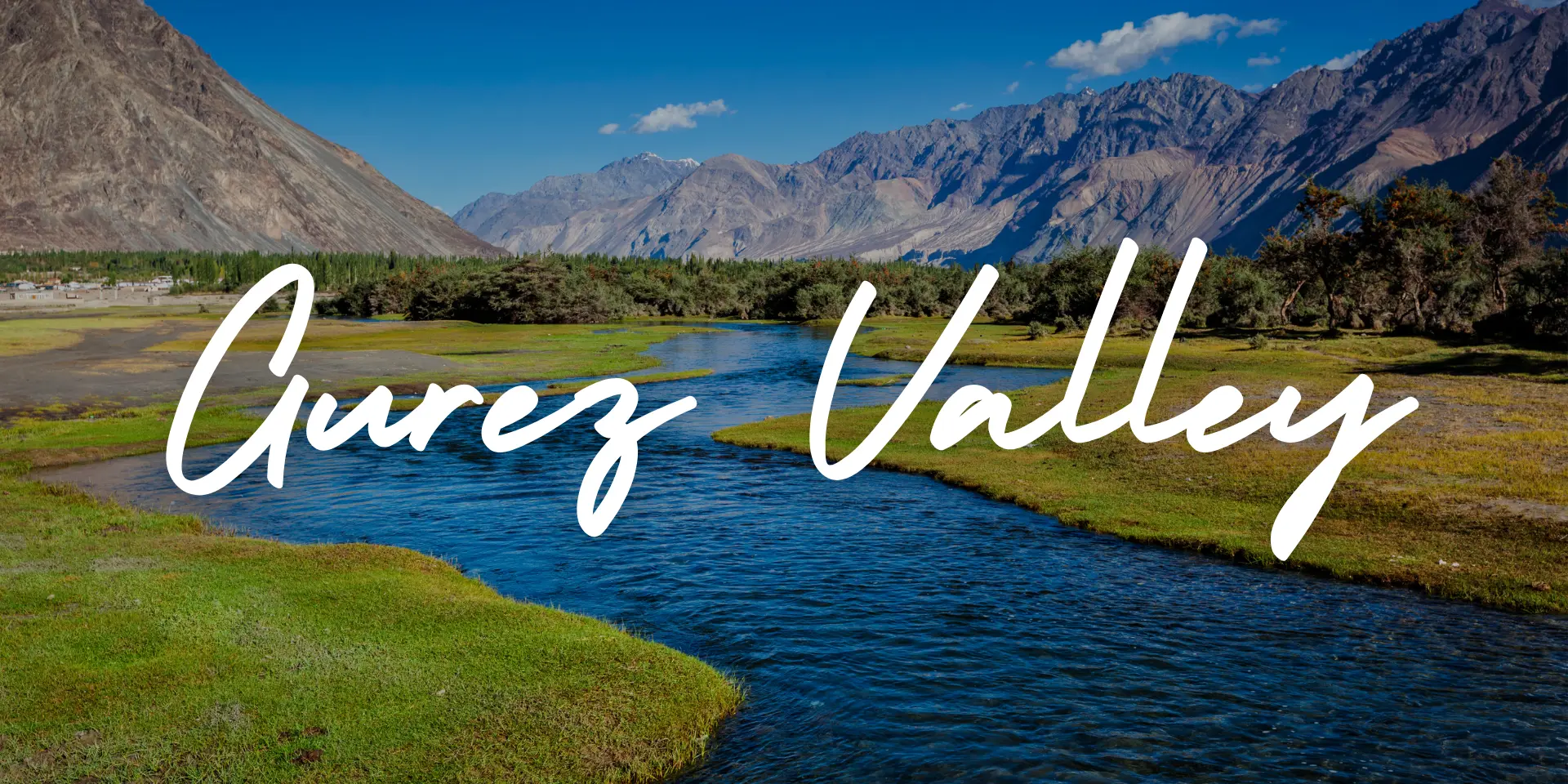
If you are a traveler and are planning to come to visit the beautiful place of Kashmir and are particularly looking for some offbeat places then Gurez Valley is the first place that will pop up on the Google search list and on every blog post that talks about offbeat places in Kashmir.
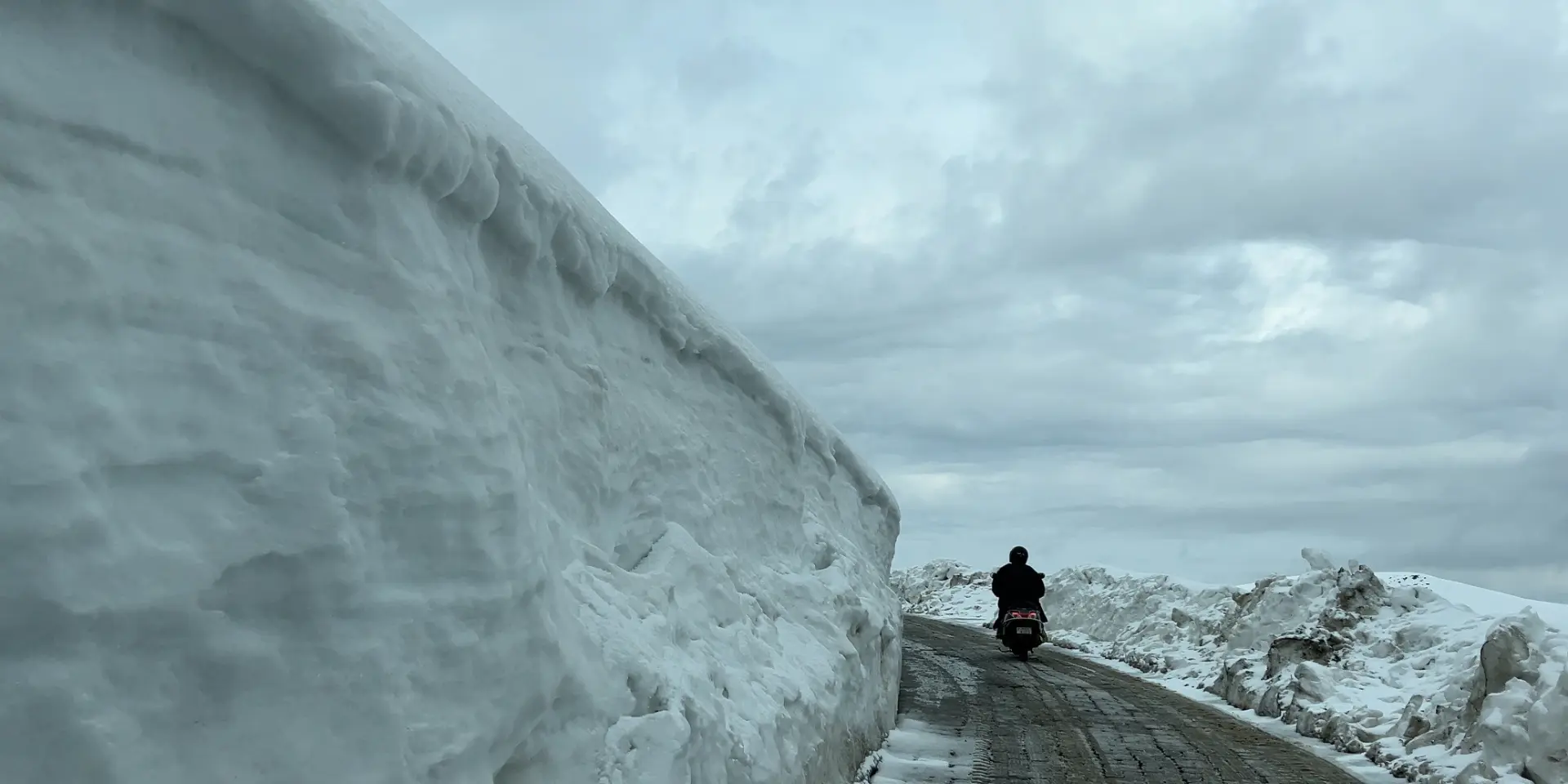
(Razdhan pass in April 2024)
Why was Gurez Valley inaccessible for so long?
Gurez Valley gained prominence and entered the offbeat tourist map in 2007. Due to security reasons, Gurez Valley was off-limits after the partition in 1947. It remained inaccessible to anyone other than local tribespeople, the army, or government workers. It wasn’t until 60 years after partition, or when India gained independence, that Gurez Valley became accessible to the public. The valley runs just a few kilometers north of the Line of Control, or nearly parallel to it. As you approach Gurez Valley, you’ll notice a significant presence of the army, with numerous barracks, camps, and checkposts as you enter the area.
Sir Walter Lawrence, a notable British official during the colonial period, wrote about Gurez Valley in his 1895 book, The Valley of Kashmir. He described Gurez Valley as “one of the most beautiful scenes in all of Kashmir,” where the tourmaline waters of the Kishanganga River are framed by “mountain scarps of indescribable grandeur.” Lawrence predicted that Gurez Valley would soon become one of Kashmir’s most popular Himalayan tourist destinations. Though his prediction took longer than expected due to unforeseen circumstances, 120 years later, here you are reading this blog post.
As a traveler myself when I head about Gurez Valley the first thing that poped in my head and if you have seen some images of Gurez Valley is the famous “Habba Kathoon Peak” which you can see below as well. This peak is named after the 16th-century poet known as the Nightingale of Kashmir, who is believed to have lived near the mountain’s base during her youth.

Our First Adventure to Gurez Valley
The first time I visited Gurez Valley was in 2023. We—my friend and I—rented a bike from Srinagar and drove all the way from Bandipora, through Razdhan Pass, to Gurez Valley. That’s the route you’ll follow, covering a total distance of 140 km to reach Dawar in Gurez Valley. To my surprise, the road was well-maintained, except for some patches and cobblestone sections around 3 km before Razdhan Pass. However, the road is entirely drivable.
The first check post you’ll encounter, marking your official entry into Gurez Valley, is at the picturesque village of Badwan. As you cross Badwan and continue towards Gurez Valley, you’ll find yourself driving along a river. This river, known as the Kishanganga River in the Indian subcontinent, flows into Pakistan, where it is called the Neelam River. The scenic drive alongside the river offers breathtaking views, making the journey through Gurez Valley even more memorable.
Stay at Gurez Valley
It was around dawn when we reached Gurez Valley, with the golden light behind the Habba Khatoon peak illuminating the landscape. To our surprise, 2023 marked the first time since India’s Independence that Gurez Valley had gained access to electricity and for the first time, the entire village was lit up with electricity in their homes and on the streets. Electricity is still a challenge in Gurez Valley, but almost all good hotels are sufficiently well-equipped and have backup power supplies.
It was already late when we reached Gurez Valley, and we knew finding a place to stay would be difficult. Some of the hotels we were familiar with, like Kaka Palace and Gurez Knights but these stays were fully booked by the time we arrived. We checked other hotels in the area, but almost all of them were fully occupied. Eventually, a caretaker from Gurez Knights helped us secure a tent near the campsite by the Kishan Ganga River for around INR 600/- per night including our breakfast. So in case you are traveling between May and September, you will need to make a future booking. There was another beautiful hotel being constructed on the banks of the Kishanganga River, but it wasn’t ready at the time. However, in 2024, some of our friends visited it, and it turned out to be a great property with a stunning view. You might want to consider it as one of the options for your stay. Check out the stay here – Sukoon Resort
We stayed at the campsite for the night. It was a little cold but bearable, we were provided with blankets and sleeping bags, which helped us stay warm. The only drawback we faced at the campsite was the washroom facilities. They were not upgraded and remained the same as when the campsite was first constructed. This issue was not specific to this campsite but was common for everyone who had installed tents in the area. We later learned that campsite tenders are issued by the BDA (Bandipora Development Authority), which might limit the construction of permanent structures. So, if you are particular about washroom facilities, staying in a tent might not be the most suitable option for you.
Exploring Gurez
The next day, we woke up early, had our breakfast, filled up the tank of our two-wheeler, and started exploring Dawar. If you plan to explore beyond Dawar, keep in mind that this is the only petrol pump available in the entire Gurez Valley. Dawar is a beautiful town with old structures. One particular place that caught our attention was an old museum set up by Mr. Bashir Ahmed. In his own house, he has preserved the Dard-Shin culture through clothes, articles, and jewelry, some of which are over 27 years old. He has more than 400 items preserved. If you’re interested in understanding the rich culture and history of the Gurez Valley, this museum should be a must-visit in your itinerary. As we explored the valley, we learned from the locals that the people of Gurez Valley and Tulail aren’t considered Kashmiri but are part of the Dard Shin tribe. Their native language is Shina. Most of their homeland, known as Dardistan, lies in Pakistan-administered Kashmir, with the Kishenganga Valley being their only enclave on the Indian side of the Line of Control.
Habba Khatoon
Our next stop took us to the “Habba Khatoon” Mountain in Achoora village, nestled in the heart of Gurez Valley. This mountain is a symbol of eternal love, reflecting the poignant story of Habba Khatoon and her beloved Yusuf Shah Chak, a man of Dardic descent. The mountain stands as a tribute to their love, a love story that has been etched in history.
Habba Khatoon lived from(1554-1609) and was lovingly called Zoon, which means “the Moon,” and was a true Nightingale of Kashmir. Though she came from a humble peasant family, her heart was drawn to poetry. She used her verses to express her emotions, struggles, love, and spiritual reflections.
In an era where women were often confined by societal expectations, Habba Khatoon broke free with her poetic voice. Beyond her romantic tale, she became a remarkable figure in literature, spirituality, and poetry. Her work resonates with deep spirituality, love, and a deep connection to nature, earning her a lasting place in the hearts of those who understand her poetry.
Her name, Habba Khatoon, is still cherished by the Kashmiri people, who remember her not only as a poet but also as an iconic figure of love and resilience.
The emperor, Yusuf Shah Chak, was captivated by her melodious voice when he first heard her singing in the fields. Her poetry, spirit, and strength of character enchanted him, leading him to propose marriage. His love for her was as deep as her love for him.
Habba Khatoon was also known for her wisdom. This is an interesting story HabbaKathoon once warned Yusuf Shah Chak against meeting Mughal Emperor Akbar, foreseeing the consequences of such a meeting. She trusted her instincts, knowing it would bring misfortune, and she urged him not to go.
In 1579, tragedy struck when Yusuf Shah Chak was imprisoned by Akbar and taken to Delhi. Despite the hardships, Habba Khatoon’s love for him remained unwavering. Yusuf Shah Chak died in prison, far from his beloved, and was buried in Bihar, India.
This devastating loss left Habba Khatoon in deep sorrow. Her life became a void without him, a love story marred by grief. The Habba Khatoon Mountain stands today as a powerful reminder of their love, a place that carries the echoes of both joy and heartache.
In addition to the mountain, the Habba Khatoon Spring in Gurez is also sacred to the locals and visitors alike. Its waters are believed to hold deep emotional and spiritual significance. The spring, which rises from an underground source in Achoora village, continues to be a symbol of the eternal bond between Habba Khatoon and Yusuf Shah Chak, a living testament to the love that transcends time.
Road Ahead of Habba Kathoon Mountain
We planned to reach the end of the road. The first 10 to 15 kilometers of the ride were on a smooth, well-maintained road, which made for an enjoyable experience. Around noon, we reached Chakwali, having crossed about 10 to 15 villages along the way. Each village had an average of 20 houses, and the population in each village was no more than 100 people. At every village, we were stopped by army checkpoints where they took down our entry details.
Once you reach Tulail Valley, the entry checkpoints start. Tulail is a stunning valley with breathtaking scenery, but there are no guesthouses for accommodation. The road from Dawar is good up to Sheikhpora, though there’s some construction work along the way. Beyond Tulail, the road becomes bumpy with a little off-roading involved.
We finally reached Chakwali, but the armed forces advised us not to take any photos or videos since we were close to the LOC. We learned that this road leads to Kargil, and construction work is already underway to make the route more accessible. In the future, we might see a more scenic route to Kargil from Gurez Valley.
The local people of Chakwali were incredibly kind and helpful. During our lunch break, we were invited by a local family to join them for a meal. They served us a delicious local lunch, featuring the famous potatoes and rajma of Gurez Valley. While chatting with the hotel owner, we were told that the road stretches another 65 kilometers beyond Dawar, with Chakwali being the last village on the Indian side of the border that civilians can visit.
Beyond Chakwali, the road ends, and it’s just Pakistan to the left, with a trekking route to Drass on the right. To reach Drass, though, you need a permit from the J&K police station in Dawar. The road conditions worsen past Dawar, and it truly tests your patience and stomach. The road may not look too bad in photos, but in reality, the conditions were much worse — about 20 times worse than what the pictures show.
For a curated experience, activities or visiting offbeat destinations in Kashmir, consider booking a tour with us.
Our Offbeat Kashmir Tour Package offers a comprehensive itinerary providing an immersive experience into the heart of Kashmir’s hidden beauty.
For more information or to book your adventure, visit www.wildfloc.com or contact us at care@wildfloc.com.